The January Reset: Pantry Organization That Actually Sticks
Five steps, one afternoon, and a simple weekly habit that keeps the pantry calm long after the new-year motivation fades.
Heads up: As an Amazon Associate I earn from qualifying purchases. We never list prices because they change constantly; check the current price on Amazon. Disclosure
In this guide
Our top picks
- Dry goods & baking staplesOXO POP 10-piece setAirtight push-button containers that stack and are dishwasher safe.Check on Amazon
- Wiping shelves & spillsMicrofiber clothsWashable microfiber that grabs crumbs and dust.Check on Amazon
- Sticky shelf spots & jarsScrub DaddyScrubs off honey rings and syrup drips without scratching.Check on Amazon
Paid links. As an Amazon Associate I earn from qualifying purchases.
At a glance: everything in this guide
| Pick | Best for | Why it made the list | Link |
|---|---|---|---|
| OXO POP 10-piece set Pantry storage | Dry goods & baking staples | Airtight push-button containers that stack and are dishwasher safe. | Check on Amazon |
| Microfiber cloths Cleaning cloths | Wiping shelves & spills | Washable microfiber that grabs crumbs and dust. | Check on Amazon |
| Scrub Daddy Sponge | Sticky shelf spots & jars | Scrubs off honey rings and syrup drips without scratching. | Check on Amazon |
After the holidays the pantry is usually the most chaotic place in the house. There is half a bag of powdered sugar from the cookie marathon, three open boxes of crackers and a mystery spice you bought for one recipe.
January is the perfect time to fix it. The fridge is lighter, the stores are full of storage bins, and the new-year urge to get organized is real. The problem is that most pantry makeovers look great for two weeks and then collapse.
The difference between a pantry that stays organized and one that doesn't isn't money or matching containers. It's a system: clear zones, the right containers for the things you use most, and a few minutes of upkeep each week. Here is the five-step plan.
Step 1: Empty everything
Yes, everything. Take it all out and put it on the counter or the kitchen table. You can't organize around clutter, and you won't know what you have until you see it all at once.
While the shelves are empty, wipe them down. A damp microfiber cloth picks up crumbs and dust without spreading them around. For sticky rings from honey, syrup and oil bottles, a Scrub Daddy in warm water does the job without scratching the shelf finish.
Amazon Basics Microfiber Cleaning Cloths
Best for: wiping shelves and keeping a cloth in the pantry for spills.
Step 2: Edit ruthlessly
Sort what you pulled out into four piles:
- Keep: you use it and it's in date.
- Use soon: in date but open or close to expiring. This becomes next week's meal plan.
- Donate: sealed, in date, and you will never eat it. Check what your local food pantry accepts.
- Toss: expired, stale or bug-damaged.
Be honest about the spices. Ground spices lose flavor over time. If it has no smell when you open it, it isn't adding much to your food.
Step 3: Create zones
Zones are the secret. Instead of putting things wherever they fit, give each shelf or section a job. Common zones:
- Breakfast: cereal, oats, pancake mix, syrup
- Baking: flour, sugars, baking soda and powder, chocolate chips
- Grains and pasta: rice, pasta, quinoa, beans
- Canned goods: soups, tomatoes, vegetables
- Snacks: crackers, chips, granola bars, at kid height if you have kids
- Backstock: extras of whatever you buy in bulk
Put the things you use daily at eye level. Heavy items and backstock go low. Seasonal items and rarely used appliances go up high.
Step 4: Contain the things you use most
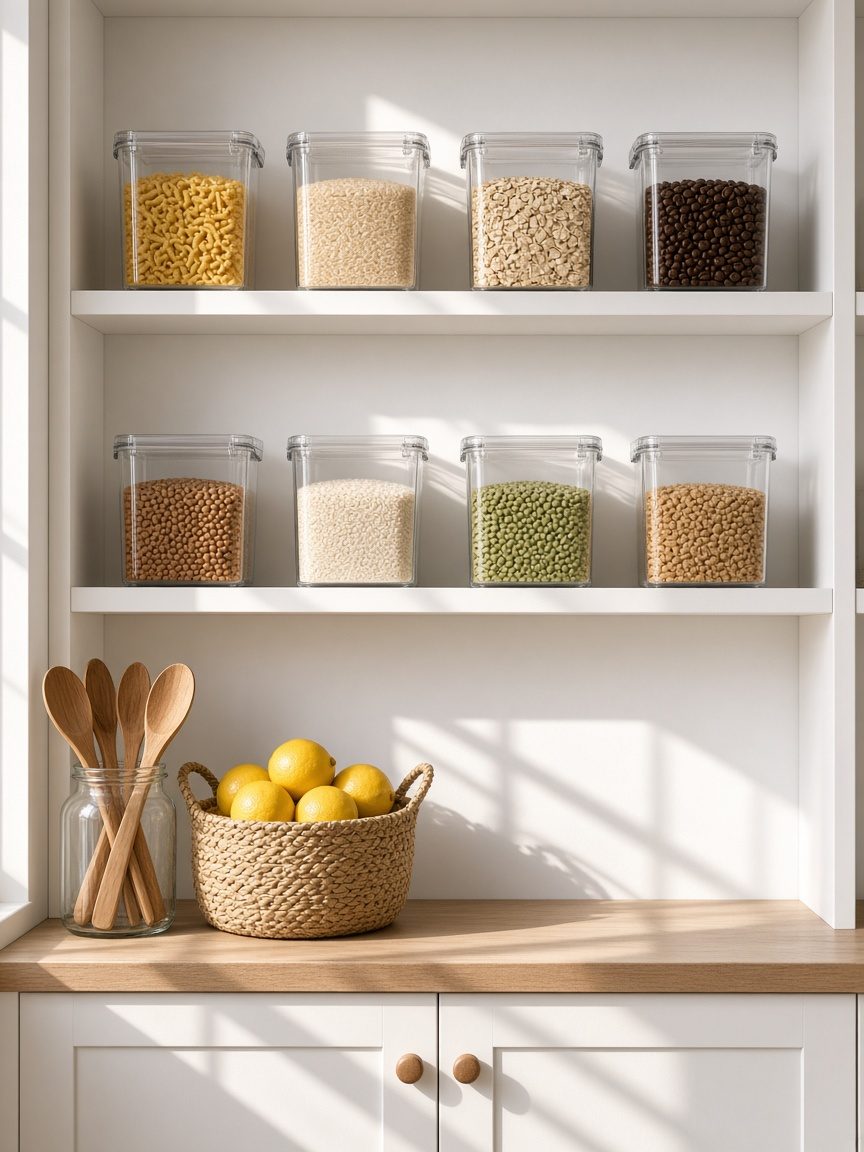
You don't need to decant everything. Start with the foods that come in floppy bags or flimsy boxes and get used often: flour, sugar, rice, oats, pasta, cereal and snacks. That's where airtight containers earn their keep.
Why we like OXO POP containers
The OXO Good Grips POP 10-piece set is one of the most popular pantry container sets for good reason. Press the button on the lid and it seals airtight; press again to pop it loose. The containers are stackable, clear so you can see what's inside and when you're running low, and dishwasher-safe.
What buyers like: the one-handed lid, how well they stack, and that dry goods stay fresh noticeably longer. What to know: the lids and seals need gentle care (check OXO's instructions), and a matched set is an investment, so start with the 10-piece set for your most-used staples and add sizes as needed instead of decanting your whole pantry at once.
OXO Good Grips POP Container Set (10-piece)
Best for: flour, sugar, rice, pasta, cereal and snacks; the things you use every week.
Decanting tips
- Measure before you buy. Check shelf depth and height so containers fit.
- Keep the recipe or cooking time. Cut the instructions off the bag and tape them to the back of the container.
- Don't top off old with new. Use up what's in the container, wash it, then refill. This keeps flour and grains from going stale at the bottom.
- Fill from the back. New groceries behind old so the older stuff gets used first.
Step 5: Label everything
Labels make the system work for everyone in the house, not just the person who organized it. If the kids know where the snacks go, they can put them back. Use simple labels for both the containers and the shelf zones.
The five-minute weekly habit
This is the part that makes it stick. Once a week, before you make your grocery list:
- Pull anything that's out of place back into its zone.
- Check the containers for anything running low and add it to the list.
- Wipe one shelf.
- Move the oldest items to the front.
That's it. Five minutes a week, and the pantry stays the way you left it in January.
Small-pantry tips
Not everyone has a walk-in pantry. If you are working with a cabinet or two:
- Use the door. An over-the-door rack holds spices, foil and wraps.
- Go vertical. Shelf risers double the usable space for cans.
- Use bins as drawers. A bin on a deep shelf can be pulled out like a drawer so nothing gets lost in the back.
- Keep a "use first" bin. Opened bags and anything close to expiring live here, front and center.
Why this matters more than it seems
An organized pantry saves money because you stop buying what you already have. It saves time because you can see what's for dinner. And it reduces food waste because things get used before they expire. A calmer kitchen makes the whole house feel calmer.
If you are also resetting the rest of the house, start with our holiday cleaning game plan, which works just as well as a post-holiday reset as it does before guests arrive.
As an Amazon Associate I earn from qualifying purchases. Product details can change; confirm specs and what is included on the listing before you buy.
Keep reading

Smart & Cozy: Easy Home Upgrades for Long Winter Nights
Simple, renter-friendly upgrades that make a home warmer, brighter and easier to live in through the dark months.

Gifts for Homebodies: Practical Comforts They'll Use All Winter
Gift ideas for the people who would rather stay in: smart lighting, insulated drinkware, a spot cleaner and comfort-food cookware.
Stocking Stuffers for Hunters, Anglers and Campers
Small, useful stocking stuffers for outdoor people: a fishing advent calendar, ferro rod, headlamps, hand warmers, water filters and more.